SeaLife Rescue
An animated explainer on SeaLife Rescue's work repopulating the oceans.
The brief
Dive into ocean conservation with an animated explainer video for SeaLife Rescue, showing their role in repopulating the oceans and caring for marine wildlife.
The script
SeaLife Rescue is solving the problem of fish shortages caused by unsustainable fishing practices and pollution. The fishing industry employs and feeds billions of people worldwide.
But the world fish population is currently threatened by unsustainable fishing practices that are removing fish at a faster rate than nature can replace. The majority of the world's wild fisheries are harvesting above sustainable rates.
In fact, Ocean Health Index projects a global collapse of fishery by 2048. Significant action is urgently needed to prevent this collapse.
But only a few countries have adopted sustainable fishing management practices. Fish populations of some species are near extinction, and dramatic changes need to be implemented.
We must reverse the downward spiral or we will soon live in a nearly fishless world. Overfishing results in reduced numbers of adults that can mature to reproduce.
As a result, there are fewer fertilized eggs being released each breeding season. Fertilized eggs develop into larvae, whose digestive systems are still underdeveloped.
They are swimming in waters polluted by microplastics which block the larva's stomachs and kill them, further reducing the wild population. SeaLife Rescue will begin the rejuvenation of our wild fish stocks with a natural, environmentally friendly three-step approach.
SeaLife Rescue is employing the latest technologies and years of marine knowledge to increase wild fish populations. Step 1.
Fertilization. Adults are caught in the wild and conditioned with nutrient-rich foods.
They naturally spawn on board the ship and we ensure that all viable eggs are fertilized. This enables a massive increase in the number of larvae that can potentially develop into adult fish.
Step 2. First feeding.
We then feed larva with cultured foods that are suitable for their undeveloped digestive systems. The larva develop into juveniles.
Step 3. They are released from the ship with the adults into marine protected areas.
At this point, the juvenile's digestive system has developed enough to be able to tolerate contaminants in water, and they are surrounded by weed and reefs, where they can naturally seek shelter from other predatory fish.
The marine protected area also gives them immediate protection from overfishing. Our three-step system rejuvenates wild fish stocks, providing the highest survival rates for juveniles.
Our technology will be the catalyst that brings wild fish populations back to healthy and sustainable levels, re-seeding the world's oceans. SeaLife Rescue's initiatives will ensure food sources for the growing world population and continued employment in the fishing industry.
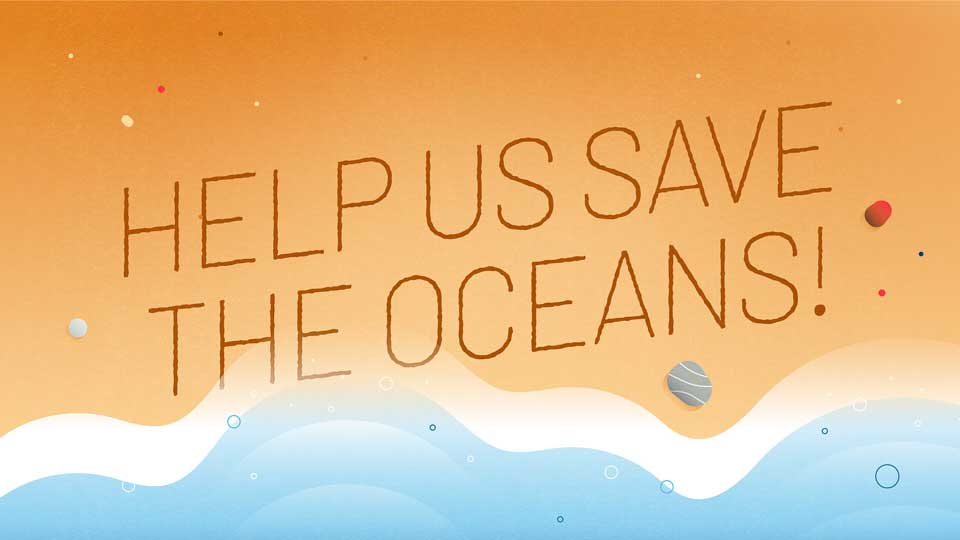
We need your help. This vital shift cannot happen without your support for our non-profit organization.
Help us enhance the wild fish stocks in oceans of the world. Support us with a small donation on our website, www.SeaLifeRescue.org.
Share this video with your friends anywhere you can, and join in the conversation on social media with hashtag SeaLifeRescue.
We and fish everywhere thank you for watching our video.
Fonts & colors
Typeface
Europa
Palette